Eugenics and You
 When Charles Darwin published his groundbreaking theory of Natural Selection in 1859, it was received by the public with considerable vexation. Although the esteemed naturalist had been kind enough to explain his theory using mounds of logic and evidence, he lacked the good manners to incorporate the readers' preconceived notions of the universe. Nevertheless, many men of science were drawn to the elegant hypothesis, and they found it pregnant with intriguing corollaries. One of these was a phenomenon Darwin referred to as artificial selection: the centuries-old process of selectively breeding domestic animals to magnify desirable traits. This, he explained, was the same mechanism as natural selection, merely accelerated by human influence.
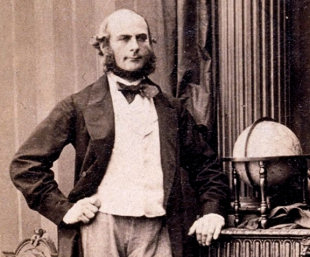
In 1865, Darwin's half-cousin Sir Francis Galton pried the lid from yet another worm-can with the publication of his article entitled "Hereditary Talent and Character." In this essay, the gentleman-scientist suggested that one could apply the principle of artificial selection to humans just as one could in domestic animals, thereby exaggerating desirable human traits over several generations. This scientific philosophy would come to be known as eugenics, and over the subsequent years its seemingly sensible insights gained approval worldwide. In an effort to curtail the genetic pollution created by "inferior" genes, some governments even enacted laws authorizing the forcible sterilization of the "insane, idiotic, imbecile, feebleminded or epileptic," as well as individuals with criminal or promiscuous inclinations. Ultimately hundreds of thousands of people were forced or coerced into sterilization worldwide, over 65,000 of them in the country which pioneered the eugenic effort: The United States of America.
Read the article on DamnInteresting.com »
Author: Alan Bellows
Category: History Your Tax Dollars at Work Medical Science The World of Tomorrow
Publish Date: Wed, 14 May 2008 21:03:16 +0000
Read more... - Read comments...
Source: Damn Interesting